Source intelligent led ceiling lamp for Restaurants, Hotels, and Homes
Compare 30 listings of intelligent led ceiling lamp from verified Chinese manufacturers. Buyers can evaluate specifications, certifications, and pricing for applications in restaurants, hotels, and residential spaces.
Key considerations
Products List




Comprehensive Sourcing Guide
Strategic Sourcing Guide for Intelligent LED Ceiling Lamps
The global demand for intelligent LED ceiling lamps has surged as commercial and residential sectors prioritize energy efficiency, smart home integration, and aesthetic versatility. For procurement professionals, navigating this market requires a disciplined approach that distinguishes between marketing claims and verified product attributes. This guide synthesizes observed market data and technical specifications to provide a robust framework for sourcing these lighting solutions. Buyers must focus on the intersection of technical performance, regulatory compliance, and supply chain reliability to mitigate risk and ensure long-term value.
Technical Specifications and Performance Parameters
When evaluating intelligent LED ceiling lamps, the primary focus must be on the core technical specifications that define performance and compatibility. The observed market data indicates a diverse range of voltage requirements, with specific products operating at 220V, while others support a broader input voltage range of AC85-265V. This variability is critical for international procurement, as a single product line may not suffice for a project spanning multiple regions with different grid standards. Buyers should verify that the selected unit's input voltage matches the local infrastructure to prevent premature failure or operational instability.
The physical dimensions and form factors are equally significant. The market offers products in various sizes, including 2 Foot, 4 Foot, and 5 Foot configurations, alongside round designs with specific dimensions such as D500mm. The choice between linear and round fixtures often depends on the architectural layout of the intended application space. Furthermore, the lamp body material is a key determinant of durability and heat dissipation. Observed materials include PC (Polycarbonate), Plastic, Silicon, and Iron. For environments requiring high durability or specific aesthetic finishes, such as polished gold, the material composition must align with the environmental conditions and design requirements.
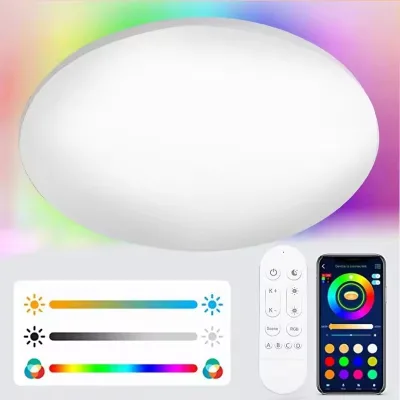
Color temperature and light output are essential for defining the ambiance of a space. While some products are specified with a "Pure White" color temperature, others offer customization options where colors can be tailored to specific requirements. The irradiated area is another critical metric; observed data suggests coverage ranging from 15-30 square meters to areas greater than 30 square meters. Procurement teams must calculate the required lumens and coverage area based on the square footage of the installation site to ensure adequate illumination without creating dark spots or excessive glare.
Compliance and Certification Verification
Regulatory compliance is non-negotiable in the lighting industry, serving as a primary filter for supplier qualification. The market data reveals a wide array of certifications that products may hold, including CCC, CE, CQC, C-tick, EMC, GS, LVD, RoHS, SAA, UL, and VDE. It is imperative for buyers to understand that not every product listed in a catalog will possess every certification. Instead, the presence of specific certifications should be verified against the target market's legal requirements. For instance, the CE mark and LVD (Low Voltage Directive) are essential for European markets, while UL and C-tick are critical for North American and Australian regions, respectively.
The standards referenced in the product data, such as CE-LVD, EMC, ROHS, GS, ENEC, and C-TICK, indicate adherence to safety and electromagnetic compatibility protocols. Buyers should request valid test reports and certificates of conformity for the specific batch being ordered. Relying on general statements like "on-demand custom" standards is insufficient; the final product must meet the specific safety standards of the destination country. Additionally, the presence of ISO certifications, such as ISOColor or general ISO standards, suggests a commitment to quality management systems, though these should be cross-referenced with the specific product's manufacturing process.
Cost Drivers and Pricing Dynamics
The pricing structure for intelligent LED ceiling lamps is influenced by a complex interplay of factors, including material costs, certification expenses, and customization levels. The observed price range in the market spans from $2 to $280 USD, reflecting the vast difference between basic fixtures and high-end, fully integrated smart systems. The lower end of the spectrum typically corresponds to standard models with basic voltage requirements and minimal customization, while the higher end often includes premium materials like crystal or iron, advanced smart controls, and comprehensive certification packages.
Minimum Order Quantities (MOQ) also play a significant role in the total cost of ownership. The market data shows an MOQ range from 1 to 500 units. For small-scale projects or prototype testing, suppliers with low MOQs are advantageous, though they may command a higher unit price. Conversely, large-scale procurement can leverage economies of scale by ordering in bulk, potentially reducing the per-unit cost significantly. However, buyers must balance the savings from bulk ordering against the risks of inventory holding and the potential for obsolescence in smart technology.
Customization is a major cost driver. The availability of customization for color, size, and design style allows for tailored solutions but inevitably increases the unit price and lead time. Products with specific finishes, such as polished gold, or unique dimensions like D500mm, often require specialized tooling or production lines, which impacts the final cost. Buyers should clearly define their customization needs early in the sourcing process to obtain accurate quotes and avoid unexpected cost overruns.
Typical Applications and Design Integration
Intelligent LED ceiling lamps are versatile solutions designed for a wide range of applications, from residential living spaces to commercial hospitality venues. The observed data highlights suitability for restaurants, hotels, luxury homes, and living rooms. The design styles vary from modern and contemporary to traditional, allowing these fixtures to blend seamlessly with diverse interior design themes. For example, a "Modern LED Fan Fixture" or a "Latest Bladeless Fan Bedroom Lamp" suggests a convergence of lighting and functional air circulation, ideal for bedrooms or lounges where space efficiency is paramount.
The choice of application dictates the specific technical requirements. In a restaurant setting, the lighting must be dimmable and capable of creating a specific ambiance, often requiring precise color temperature control and high-quality light distribution. In a hotel or luxury home, the aesthetic appeal is paramount, necessitating high-end materials like crystal or iron and finishes like polished gold. The "Lighting and Circuitry Design" service offered by some suppliers indicates that these products can be integrated into broader smart home ecosystems, providing remote control and automation capabilities.
Supplier Evaluation and Origin Analysis
Selecting the right supplier is critical for ensuring product quality and supply chain stability. The market data identifies several key manufacturing locations in China, including Ningbo, Cixi (Zhejiang), and Zhongshan. These regions are known for their specialized lighting clusters, but each may have different strengths. Ningbo and Cixi are often associated with high-volume manufacturing and export capabilities, while Zhongshan is renowned for its diverse range of lighting products. Buyers should evaluate suppliers based on their specific location, as this can influence logistics costs, lead times, and the availability of specific product models like the LMF24-600 or YC01.
Supplier evaluation should also include a review of their production capabilities and quality control processes. The presence of a "Lighting and Circuitry Design" service suggests a higher level of technical expertise, which is beneficial for complex projects. Buyers should verify the supplier's ability to handle customization requests and their track record in delivering products that meet the required standards. It is also important to assess the supplier's response to quality issues, as the warranty period for some products is observed to be up to 6 years, indicating a confidence in product longevity.
Quality Control and Long-Term Procurement Considerations
Quality control is a continuous process that begins before the order is placed and extends through the product's lifecycle. The observed warranty periods, such as 6 years for certain models, serve as a strong indicator of a supplier's confidence in their product's durability. However, buyers should not rely solely on warranty claims; they must implement rigorous quality control measures, including pre-shipment inspections and random sampling. The packaging methods, ranging from "Inner Box+Carton Box" to "Carton Packed with Foam Inside or Wooden Packed," are crucial for protecting the product during transit. For fragile items like crystal fixtures, wooden packing may be necessary to prevent damage.
Long-term procurement considerations involve managing the relationship with the supplier to ensure consistent supply and support. The lead time for delivery is a critical factor, with some suppliers indicating a delivery date of 25-30 days after the deposit. This timeline must be factored into the project schedule to avoid delays. Additionally, the "Color Guarantee" of 3 years for some products highlights the importance of color consistency over time, which is vital for maintaining the aesthetic integrity of a space. Buyers should establish clear communication channels with suppliers to address any issues promptly and ensure that the product continues to meet performance standards throughout its operational life.
Comparative Analysis of Product Attributes
To facilitate informed decision-making, the following table summarizes key attributes observed in the market, providing a quick reference for buyers comparing different product options.
| Attribute | Observation Range / Specifics | Procurement Consideration |
|---|---|---|
| Voltage | 220V, 90V-260V, AC85-265V, 12V | Verify compatibility with local grid standards. |
| Material | PC, Plastic, Silicon, Iron, Crystal | Select based on durability, heat dissipation, and aesthetics. |
| Certifications | CCC, CE, UL, RoHS, SAA, GS, EMC | Ensure compliance with target market regulations. |
| Size/Dimension | 2-5 Foot, D500mm, Round | Match to architectural layout and ceiling height. |
| Warranty | Up to 6 Years | Indicates supplier confidence; verify terms and conditions. |
| Packaging | Inner Box+Carton, Foam, Wooden | Protects against transit damage; critical for fragile items. |
| Origin | Ningbo, Cixi, Zhongshan, China | Influences logistics and potential tariff implications. |
| Customization | Available (Color, Size, Style) | Increases cost and lead time; define requirements early. |
By adhering to these guidelines and leveraging the observed data, procurement professionals can navigate the complex landscape of intelligent LED ceiling lamps with confidence. The key lies in balancing technical specifications, regulatory compliance, and cost considerations to secure high-quality products that meet the specific needs of the project.
FAQs
What certifications are available for intelligent led ceiling lamps?
Products commonly hold certifications such as CCC, CE, UL, RoHS, and SAA. Buyers must verify specific certificates match their target market regulations, as not every listed product possesses every certification.
Which voltage ranges do these lamps support for international use?
Voltage options include 220V, 12V, and broad ranges like AC85-265V or 90V-260V. Selecting the correct input voltage is critical to ensure compatibility with local grid standards and prevent operational instability.
Can I customize the color temperature and design style?
Customization is available for color, size, and design styles like modern or traditional. While some units offer pure white light, others allow color requirements to be tailored, though this may impact lead time and cost.
How long is the typical delivery lead time after deposit?
Delivery dates are often set for 25-30 days after the deposit to guarantee quality. This timeline must be factored into project schedules to avoid delays, especially for customized orders requiring specialized tooling.
What materials are used for the lamp body construction?
Observed materials include PC, plastic, silicon, iron, and crystal. The choice depends on durability needs and aesthetic preferences, with options like polished gold finishes available for luxury applications.
Which suppliers are located in major Chinese manufacturing hubs?
Manufacturers are located in Ningbo, Cixi, and Zhongshan, China. These regions offer specialized lighting clusters, but buyers should evaluate specific locations based on logistics costs and product model availability.